

 Indie games
Space agency simulator 9.8 gets an updated Steam demo and promises space exploration based on orbital physics

terça, 6 de outubro de 2026 09h 33min
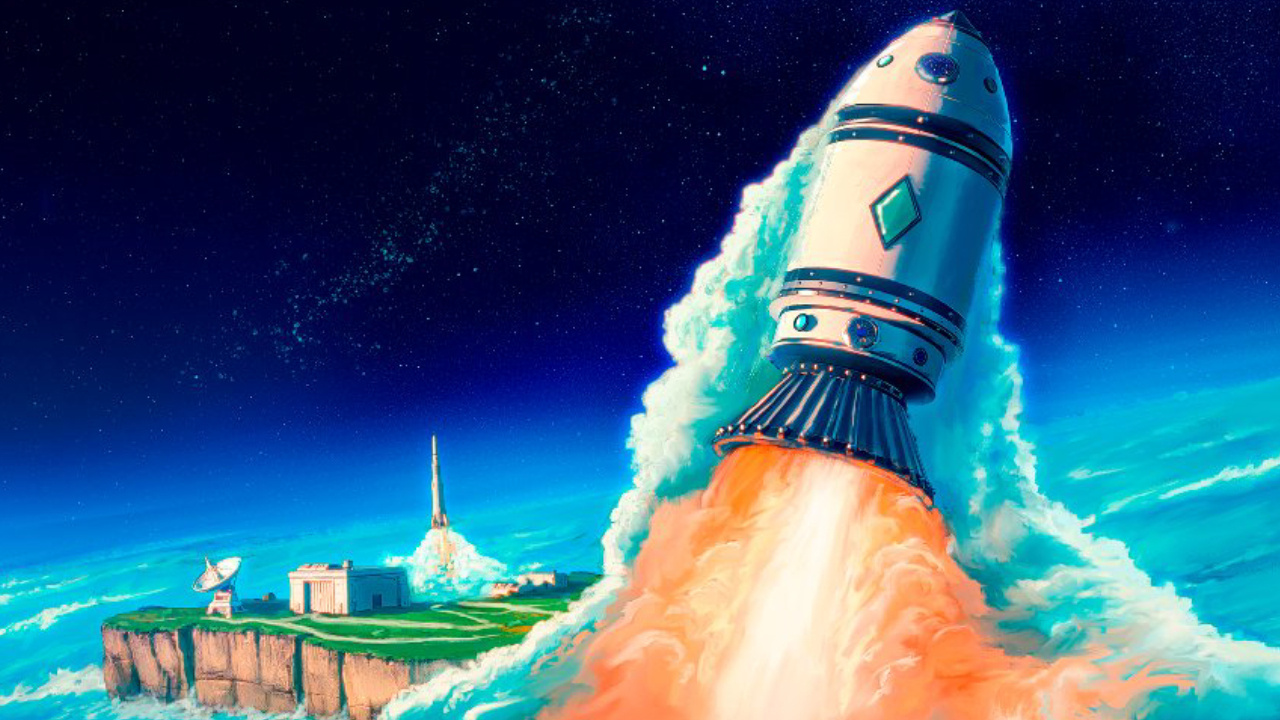
The 2D space agency simulator 9.8, designed by solo indie developer André under Tremoço Games, has an updated demo available on Steam and is scheduled to launch on December 15. The project is built around orbital physics, with celestial bodies and vehicles governed by n-body systems, allowing for unconventional situations such as altering the orbit of a moon. The experience combines the complexity of space simulators with a more relaxed presentation, placing players on a progression that begins with simple operations and gradually advances toward increasingly distant missions.
Progression starts practically from scratch and depends on expanding the space program’s observation and exploration capabilities. Building observatories, launching telescopes and developing infrastructure allow players to reveal new targets and opportunities, while later stages demand greater mastery of flight operations and the conditions encountered across different regions of space.
The simulation brings together elements such as mass, fuel, thrust-to-weight ratio, heating, stage separation and aerodynamics during rocket construction and piloting. Each mission requires direct control over maneuvers, trajectory planning and precise decisions during flight, making the outcome dependent on the player’s choices rather than following predetermined sequences.
Orbital physics also plays a central role in the experience, with the gravitational influence of multiple bodies affecting transfers, captures and trajectories. Atmospheres, reentry, heat, buoyancy, momentum and hydrodynamics also contribute to the simulation, creating different conditions for operations in space, atmospheric flight, surface landings and activities across oceans.
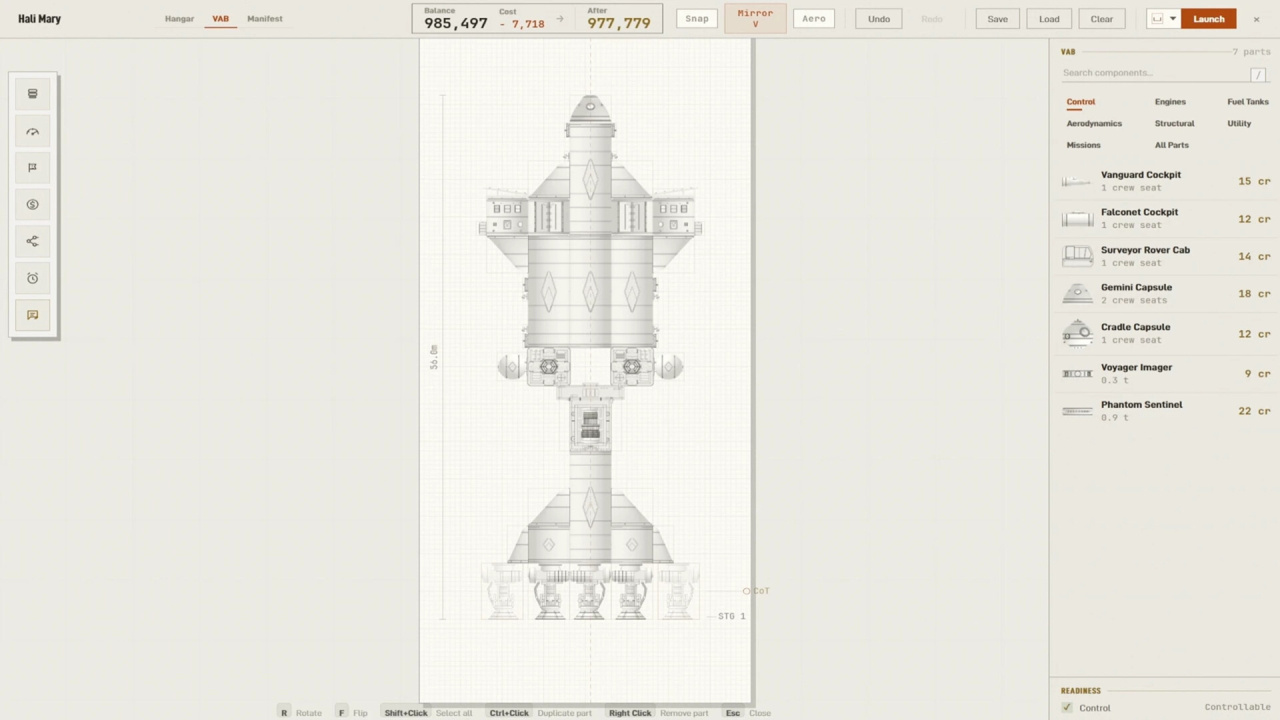
Vehicle construction allows players to develop models tailored to different missions, test designs under the limitations imposed by the simulation and make adjustments until they find configurations capable of withstanding the environments they are intended to reach. The construction tools continue to evolve throughout development, supporting the project’s goal of providing greater freedom for experimentation and vehicle refinement.
Expanding the space program also depends on establishing infrastructure capable of supporting longer-range missions. Stations, colonies and surface facilities can expand operations and turn initially inaccessible destinations into new objectives, while communication systems and supply chains introduce additional logistical and resource management demands.
Exploration takes place in the Solara system, a local star cluster created to serve as the setting for operations and discoveries. Technological advancement gradually expands the reach of missions, while different environments and physical interactions require specific solutions for each stage of expansion.
Development testing remains open, allowing the community to participate in the project’s evolution. The experience aims to combine space program management, vehicle construction and piloting with a simulation in which physical interactions can produce unexpected outcomes, including extreme situations that naturally emerge from the rules governing the game’s universe.
Related news!
Indie games
 Indie games
 Indie games
 Indie games
 Indie games