

 Indie games
March Out! puts players in command of a medieval army with real-time strategy and third-person combat

sábado, 17 de outubro de 2026 00h 10min
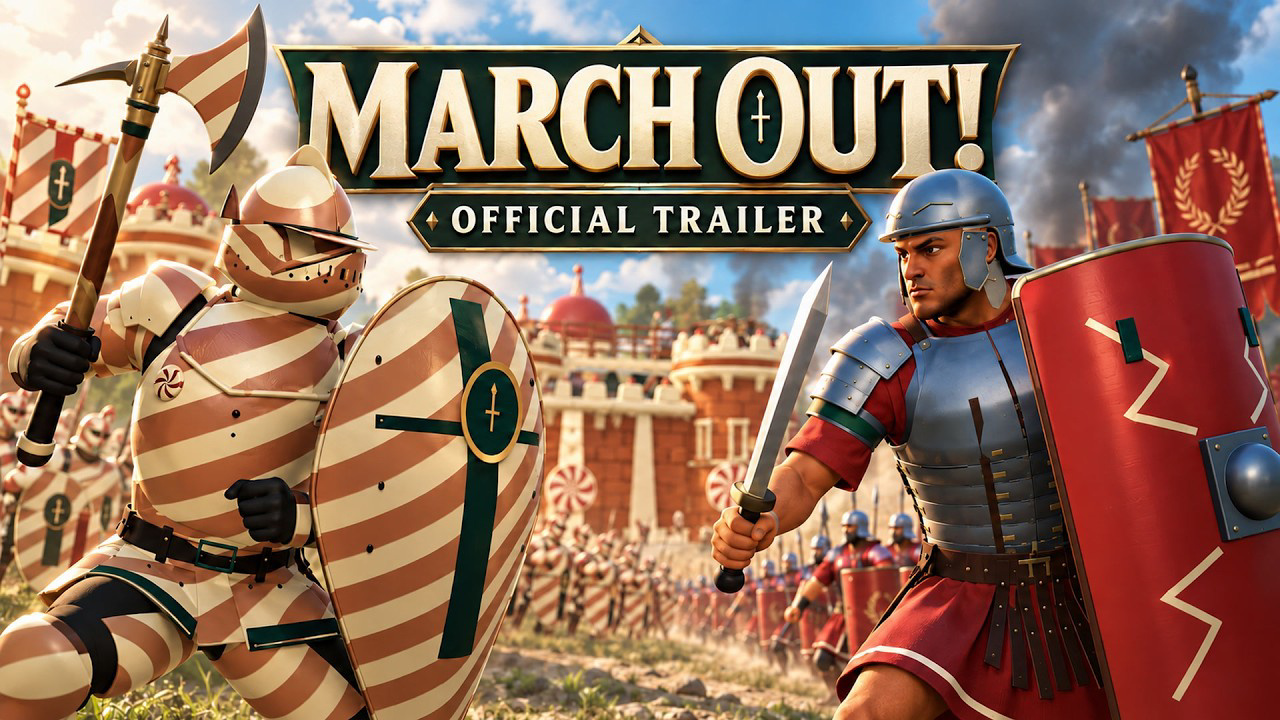
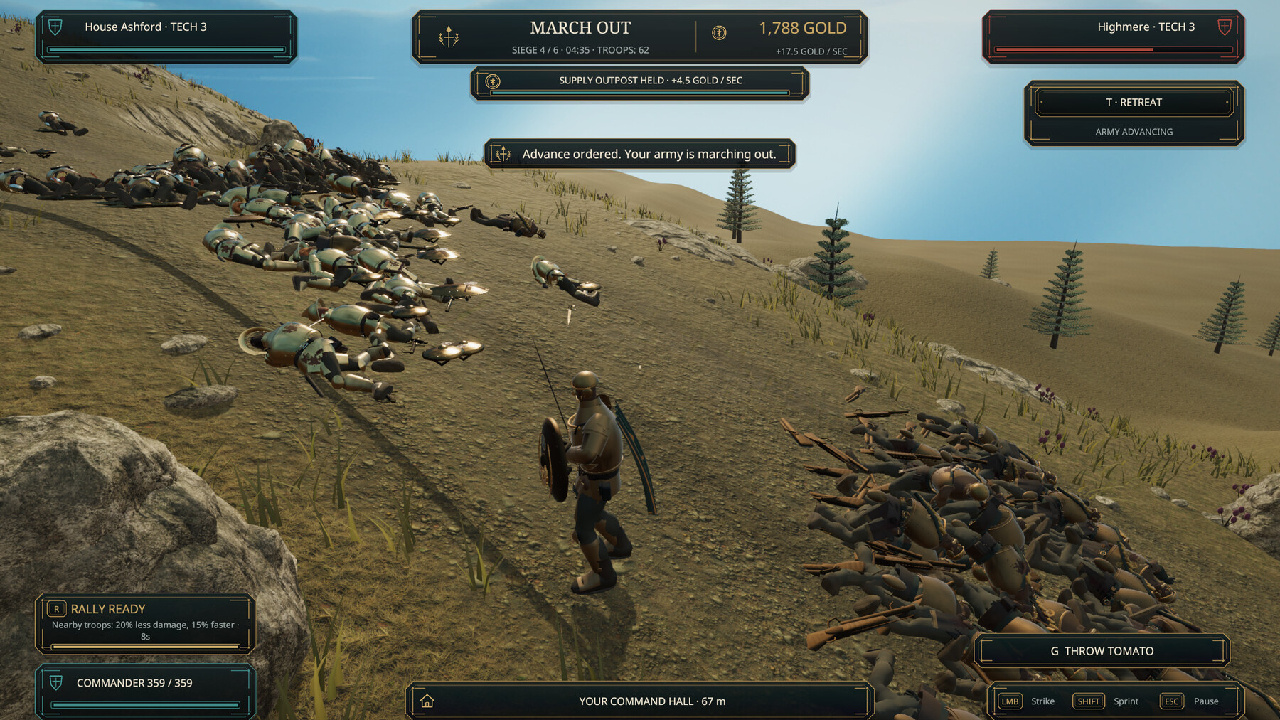
Independently developed by Mason Brignac, March Out! puts players in command of medieval armies fighting to conquer castles. The project combines real-time strategy with third-person combat, allowing players to recruit soldiers, strengthen fortifications and plan attacks before taking direct control of their commander to fight alongside their troops. The experience features online matches for two to four players, as well as a single-player campaign in which survivors from each battle can be carried over to the next siege.
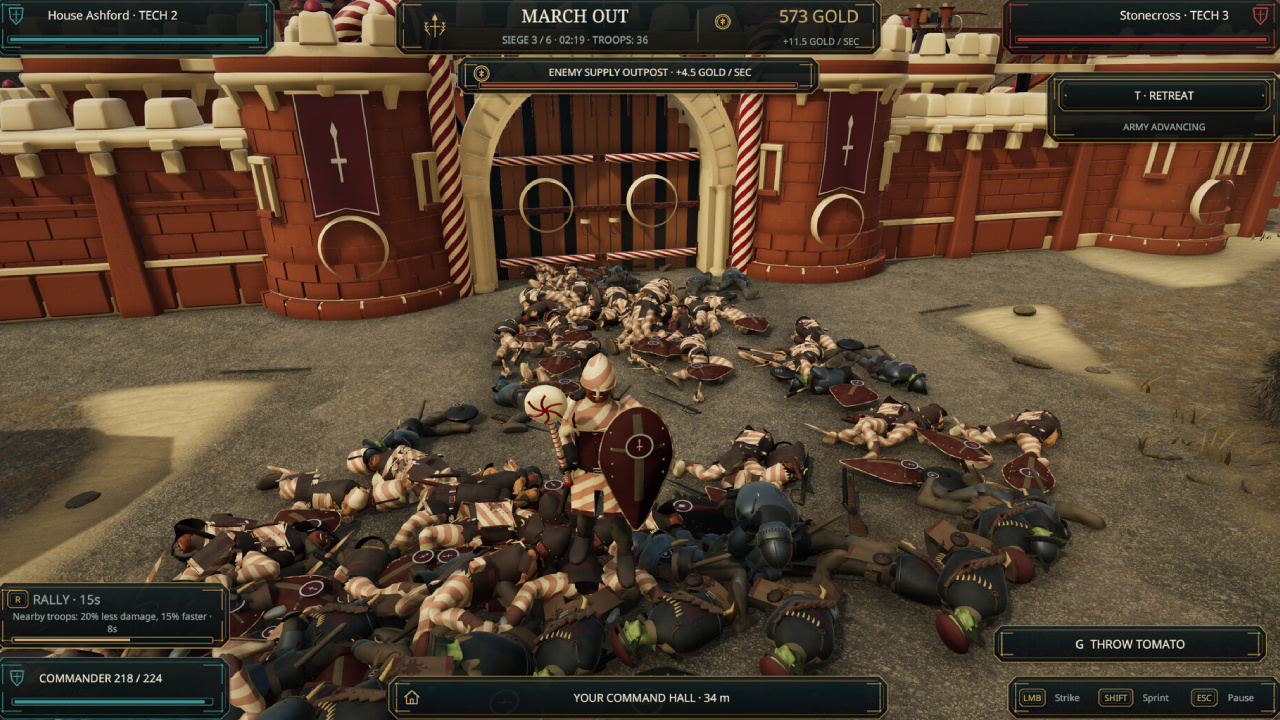
Kingdom management takes place in a command room with three views dedicated to recruitment, defensive structures and military development. Progression spans three technological eras, with equipment evolving from bows to crossbows and, eventually, firearms. Investing in upgrades allows players to expand their castles, research stronger defenses and unlock additional tower positions, but requires careful financial planning, as building and repairing structures consumes gold that may also be needed to support offensive operations.
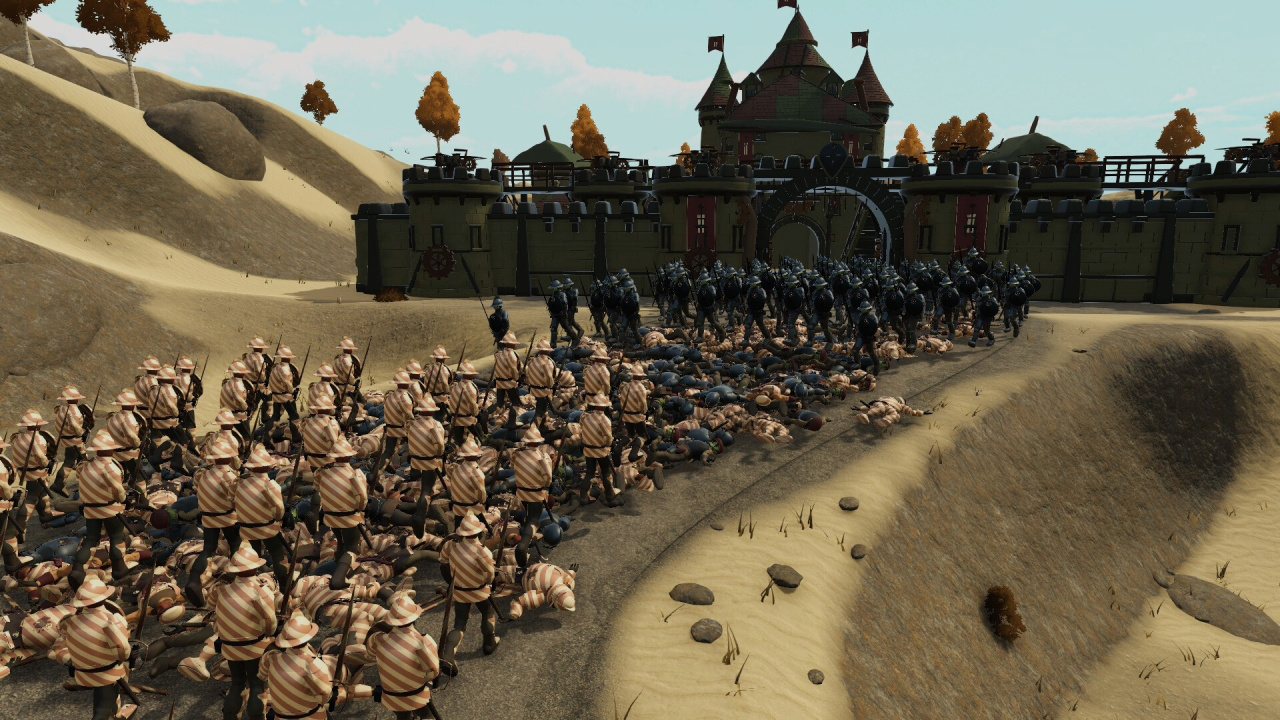
Combat allows players to switch between strategic management and direct participation on the front lines, with the commander attacking nearby enemies, moving between the castle and the troops, and rallying allies to withstand enemy advances. Clashing shields, crossbow bolts and explosions shape the battles, while damaged armor, fallen soldiers and burning fortifications highlight the consequences of each advance. Players can also order retreats to reorganize their troops behind the castle walls, although this maneuver does not restore soldiers' health or eliminate the threat of a siege.
Capturing fortified positions scattered across the map increases available income and allows players to use captured weapons to support their armies. Offensive resources include catapults that launch incendiary pots, capable of turning sections of the battlefield into dangerous areas for large formations. Environments include forest roads, river crossings, quarries, exposed ridges, swamps and snow-covered mountain passes, each presenting different conditions for troop movement and approaches to enemy castles.
The single-player campaign features six castles to conquer. After each victory, players can occupy the defeated fortress, restore its defenses and prepare their surviving army for the next confrontation. Progression requires balancing the expansion of the kingdom with the preservation of veteran soldiers, as increasingly powerful enemies may demand troop reorganization before another offensive. Continuity between battles makes resource management and unit preservation essential to advancing through the campaign.
Online matches feature four distinct game modes. In Castle War, two commanders wage a prolonged war of conquest, carrying surviving troops into subsequent battles until one side loses all its castles. King of the Keep brings two to four players together in a fight to control the courtyard of a large central fortress, while Capture the Banner requires players to transport a banner to their own castle three times to secure victory. Last Castle Standing pits rival kingdoms against one another, with each player defending a single castle until only one remains.
Customization allows players to choose their house name, colors and coat of arms, as well as change their commander's appearance. Visual options include bronze, silver and polished gold armor finishes, alongside themes inspired by goblins, the undead and candy. These changes extend to troops and fortresses while preserving team identification and the equipment distinctions between eras. For lighthearted moments during matches, players can also throw harmless tomatoes at their opponents, leaving temporary stains without affecting combat.
The experience features keyboard and mouse controls, four graphics presets and individual visual settings, allowing players to adjust performance and presentation to suit their preferences. The interface is available in 15 languages, making the game accessible to a wider audience. By bringing together economic management, military progression, large-scale battles and competitive encounters, the project focuses on combining strategic planning with direct participation in medieval sieges.
Related news!
Indie games
 Indie games
 Indie games
 Indie games
 Indie games